Delivery Logistics
Explore the infrastructure and systems that power modern sandwich delivery operations.
Behind every successful sandwich delivery lies a complex network of logistics systems, technologies, and processes. This page explores the infrastructure elements that enable restaurants to deliver fresh sandwiches efficiently across urban and suburban environments.
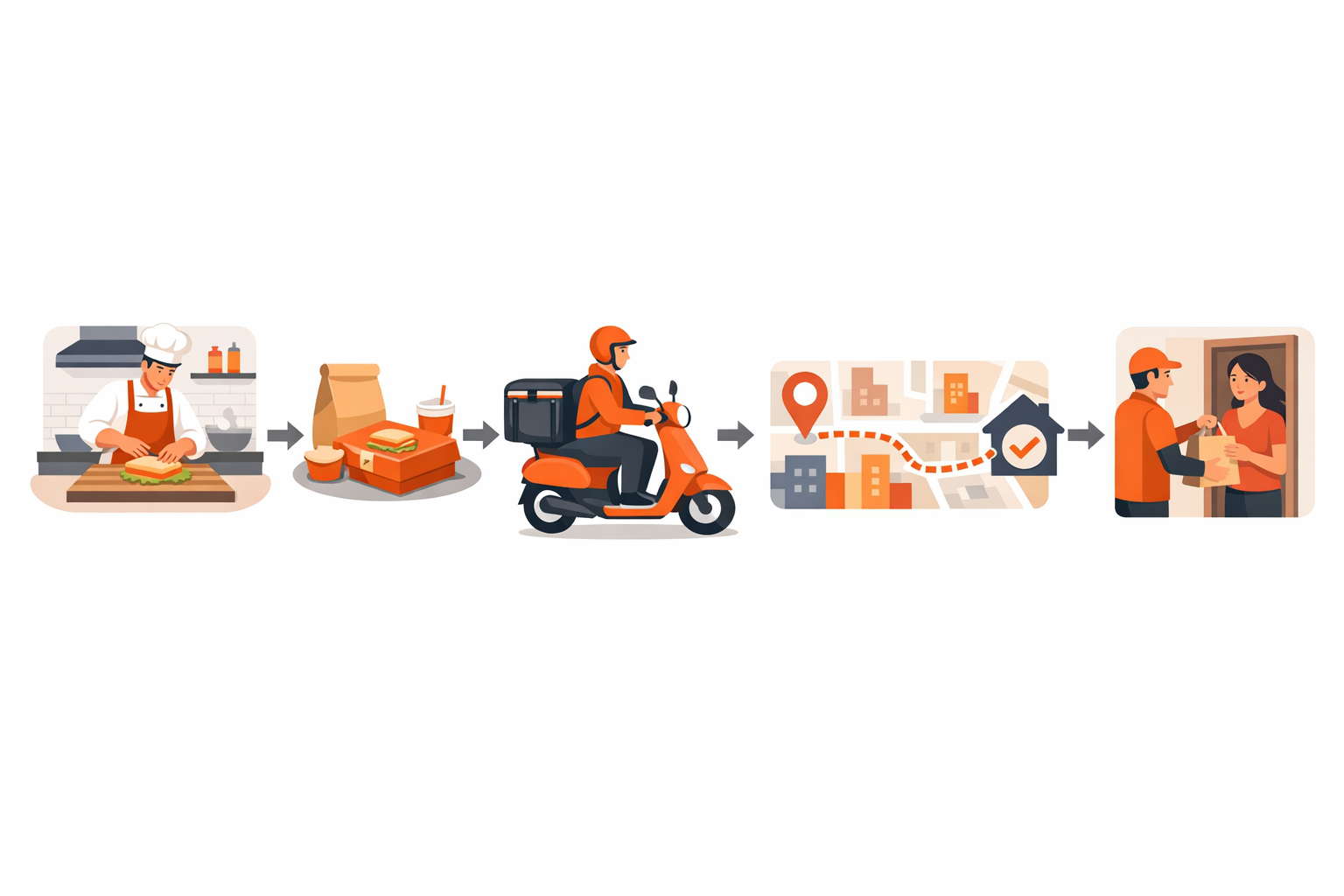
The sandwich delivery process flow from preparation to customer delivery
Delivery Routing Systems
Route optimization forms the backbone of efficient delivery logistics. Modern routing systems use sophisticated algorithms to determine the most efficient paths for drivers to follow when making deliveries. These systems consider numerous variables simultaneously, including current traffic conditions, distance between stops, delivery time windows, and driver availability.
The goal of route optimization is to minimize total delivery time while maximizing the number of successful deliveries. This benefits all parties involved—customers receive their orders faster, drivers can complete more deliveries in their shift, and restaurants can serve a wider geographic area effectively.
Key Routing Factors
- Traffic Analysis: Real-time and historical traffic data help predict optimal routes and times for travel between locations.
- Distance Optimization: Algorithms calculate the shortest practical routes considering road networks and accessibility.
- Multiple Stop Sequencing: When drivers handle multiple orders, systems determine the most efficient sequence for all deliveries.
- Time Window Management: Routes are planned to meet promised delivery windows for all customers on a driver's route.
- Dynamic Re-routing: Systems can adjust routes in real-time based on changing conditions like accidents or sudden traffic.
Order Dispatch Systems
Order dispatch systems coordinate the assignment of deliveries to available drivers. When an order is ready for pickup, the dispatch system identifies the best available driver based on proximity, current workload, vehicle type, and other relevant factors. This matching process happens automatically and within seconds to minimize delays.
Modern dispatch platforms integrate multiple data sources to make intelligent assignment decisions. They consider the restaurant's location, the delivery destination, driver locations, traffic patterns, and even driver performance metrics. The result is a coordinated system that efficiently moves orders from restaurants to customers.
Automated Assignment
Algorithms automatically match orders with drivers based on location, capacity, and timing. This eliminates manual coordination and speeds up the dispatch process significantly.
Capacity Management
Systems track how many orders each driver can carry and ensure assignments don't exceed practical limits. This prevents overcrowding and maintains food quality.
Predictive Dispatch
Advanced systems predict when orders will be ready and position drivers proactively, reducing wait times at restaurants and improving overall delivery speed.
Transportation Timing
Timing coordination is essential for successful sandwich delivery. Every step of the process operates within specific time windows, from food preparation to driver pickup to final delivery. Effective timing ensures food arrives fresh while meeting customer expectations.
Delivery platforms have developed sophisticated timing models that account for preparation time variability, traffic fluctuations, and driver availability patterns. These models continuously improve through machine learning, becoming more accurate over time as they process more delivery data.
Timing Components
- Preparation Estimation: Systems estimate how long each order will take to prepare based on menu items, order complexity, and current kitchen workload.
- Travel Time Prediction: Historical and real-time traffic data help estimate travel times between locations accurately.
- Pickup Scheduling: Drivers are dispatched to arrive when orders are predicted to be ready, minimizing food waiting time.
- Delivery Windows: Customers receive estimated delivery windows that account for all timing variables in the process.
Temperature Control Infrastructure
Maintaining proper food temperature during transport is critical for both food safety and quality. Sandwich delivery relies on specialized equipment and protocols to ensure food remains at appropriate temperatures throughout the journey.
Food Safety Standards: Hot foods should be kept above 140°F (60°C) while cold foods should remain below 40°F (4°C) during transport. The "danger zone" between these temperatures promotes bacterial growth and should be avoided.
Delivery operations use insulated thermal bags designed to maintain temperature for extended periods. These bags come in various sizes and configurations, from individual meal containers to large multi-order carriers. Some advanced systems include heated or refrigerated compartments for extended delivery routes.
Technology Integration
Modern delivery logistics rely on seamless technology integration across multiple platforms and devices. Restaurant point-of-sale systems connect with delivery platform APIs, driver mobile applications, and customer-facing interfaces. This interconnected ecosystem enables real-time coordination and visibility throughout the delivery process.
Restaurant Systems
Point-of-sale and kitchen display systems integrate with delivery platforms to receive orders, manage preparation, and signal when orders are ready for pickup.
Driver Applications
Mobile apps provide drivers with order details, navigation, customer communication tools, and delivery confirmation features. These apps are the primary interface for drivers in the delivery process.
Customer Interfaces
Web and mobile applications allow customers to browse menus, place orders, track deliveries in real-time, and communicate with drivers or restaurants as needed.
Logistics Challenges
Delivery logistics face ongoing challenges that require adaptive solutions. Traffic congestion, weather conditions, varying order volumes, and driver availability all create complexity in the system. Successful delivery operations build flexibility into their logistics processes to handle these variables effectively.
- Peak Demand Management: Lunch and dinner rushes create spikes in order volume that stress logistics systems. Smart scheduling and dynamic pricing help manage demand.
- Weather Adaptation: Rain, snow, and extreme temperatures affect both delivery operations and customer demand patterns. Systems adjust timing estimates and may limit service areas during severe weather.
- Special Events: Concerts, sports games, and local events create unusual traffic and demand patterns that require special routing and capacity planning.
- Driver Pool Management: Maintaining adequate driver coverage across different times and areas requires sophisticated forecasting and incentive programs.